
It’s been a month since I posted here. With the start of the academic year, we had to slow things down a bit, but they haven’t stopped: September has been our editing and mixing time.
Since many of my readers and listeners are not musicians – and some are students with little experience in the recording studio – I’ve decided to explain the process here and share some insight into the making of this particular album.
What is the mixing process? Well, the basic idea of mixing is to take everything that has been recorded – in our case, each tune has some 40 channels of information -- and make sure the volumes are well balanced to create the final version that will go into the CD. If it sounds like a lot of work, it is! I have been very fortunate to work with Ben Lange on this project! It’s our first project together and he’s an absolute joy to work with: very knowledgeable, competent, and he has a great sense of humor – even after listening to my music hundreds and hundreds of time! Back to the mixing process: there’s much more to it than just balancing the volumes. In fact, before we even begin mixing, we need to edit what was recorded.
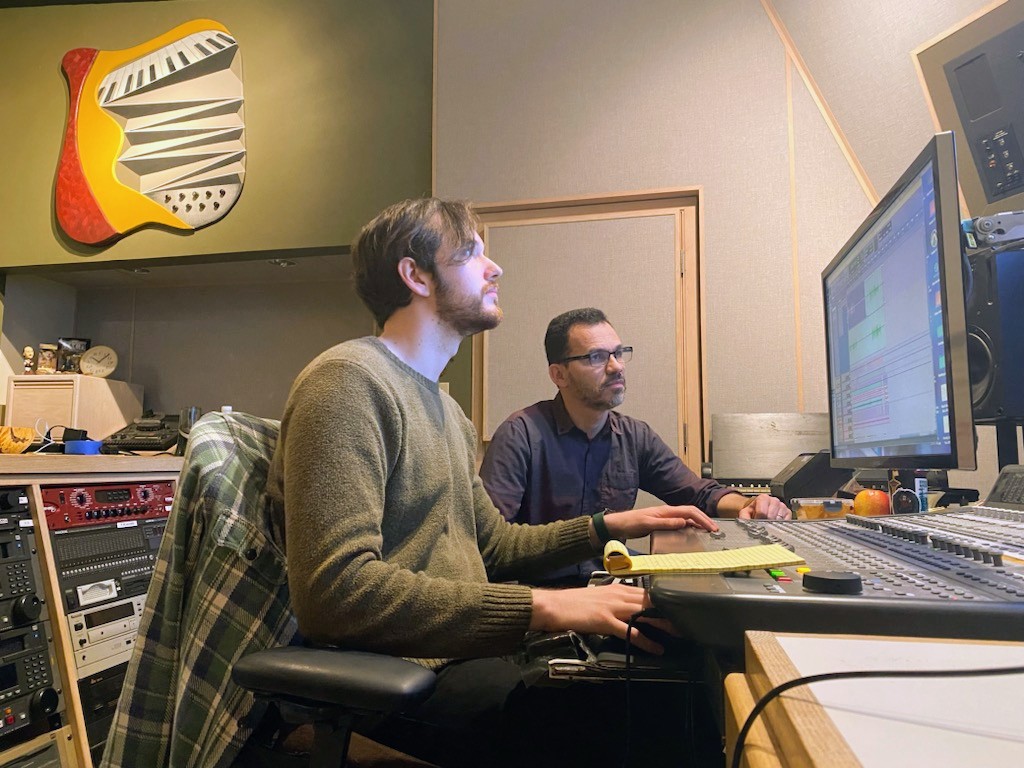
In the editing process, the first thing we do is go through the separate takes of the music. That’s because we record each tune a few times, until we feel good about a given take. In the editing process, we pick our favorite take, and start working from there. The next step is to choose the solos: because the solos are improvised, the soloists record separately in an isolated booth, so that they can be free to explore ideas without interfering with the sound of other performers recording in the room. Soloists always come up with at least a couple of takes for a particular section of the music; this gives me freedom to choose my favorite one. Instruments like percussion often record several parts on top of each other in several takes and using separate channels; it is during editing that we decide which parts will be kept, which ones will go away forever. It’s fascinating to think that there are great solos and other interesting parts that will never make it to the final CD. On the other hand, the editing process sometimes gives us a chance to add last minute instruments: in our case, Ben added a beautiful mandolin part to my piece “Choro for my Boys,” and I ended up adding a shaker to the tune “Mistlike” – the only instrument I play on the album!
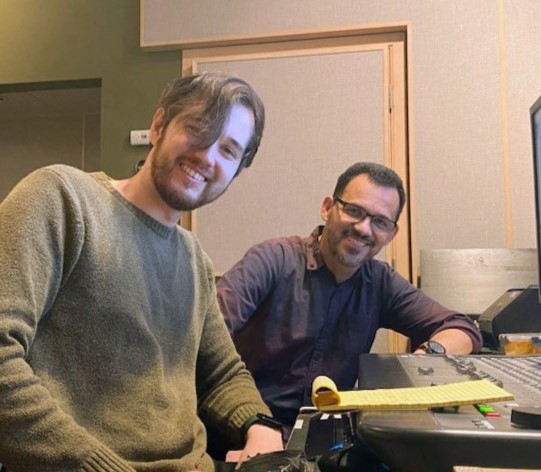
Then the mixing finally takes place. Mixing involves making sure each instrument sounds good (EQ, reverb, compression… whatever is needed). They also need to have a good position in the stereo (we call it “panning”); for example, should the guitar be a little more on the left side of the mix, so that it doesn’t sound too crowded with the piano? How are the five saxophones distributed – left to right - across the stereo field? Remember, we're talking about 20 instruments plus soloists trying to stay out of each other’s’ way. What’s the ideal volume relationship between them? These are the questions we try to answer as we clean up the sound and slowly piece it together. This job is physically tiring. Your ears get tired after a while and it becomes hard to judge. We often need to leave it alone for a couple of days, before we get back to it.
It has been really fun to hear this music coming alive. As of this writing, we have finished 60% of the mixing process, the other 40% has already started and it shouldn’t take much longer. I have some exciting news that I will be able to share in the next couple of blog posts in October, so keep following here. I am beginning to write the liner notes for the CD and the art cover is already being designed. More on that later!
Abraço,
-Cassio